
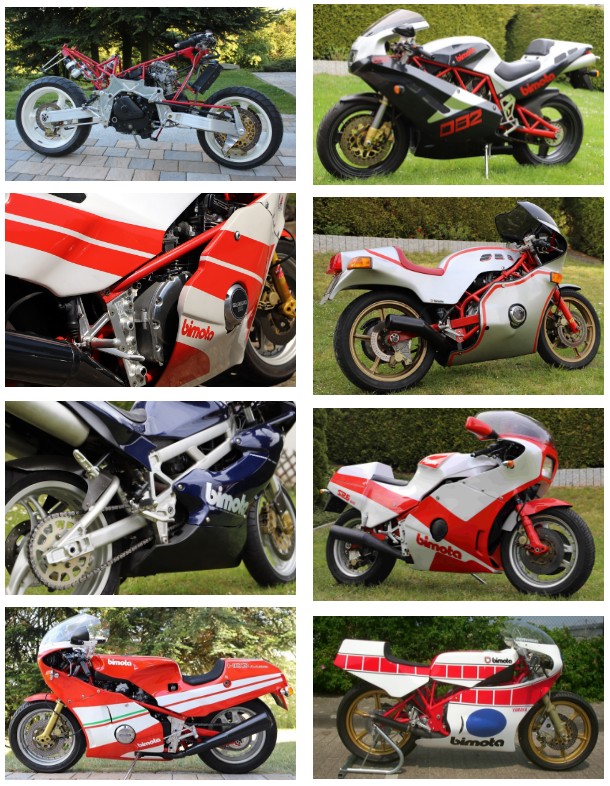
Sometimes a project takes unexpected turns and develops in ways you could never have anticipated. That is exactly what happened in early July 2026, when I received a call from Robert, an editor at Oldtimer Praxis magazine. He had come across the restoration of my Bimota HB3 on my website and wanted to publish an article about it. In his view, both the motorcycle’s condition before the restoration and the final result were remarkable. At the same time, he was fascinated by the Bimota brand – and with only 101 examples ever produced, the HB3 is an exceptionally rare motorcycle.
Naturally, I agreed immediately. I was delighted that my restoration had attracted the attention and interest of a renowned specialist magazine. After all, this offered an opportunity to present the HB3 to a much larger audience and perhaps make a small contribution towards ensuring that the classic Bimota models are not forgotten.
However, at that point it was by no means certain that an article would actually be published. Initially, only the editor himself was interested in the story. He wanted to convince his editorial team to run a feature on the HB3 – understandably, he could not yet give me any guarantees.
Then there was nothing to do but wait. More than four weeks passed without any news. Finally, at the end of July, the message I had been hoping for arrived: the editor-in-chief had approved the article. Fantastic! It was actually going to happen. I would be able to present my HB3 in the magazine.
At the beginning of August, the interview with the editor took place. Naturally, the discussion was not limited to the technical aspects of the restoration. We also talked about the history of the HB3, its condition before the restoration, the individual stages of the work and the reasons behind the entire project.
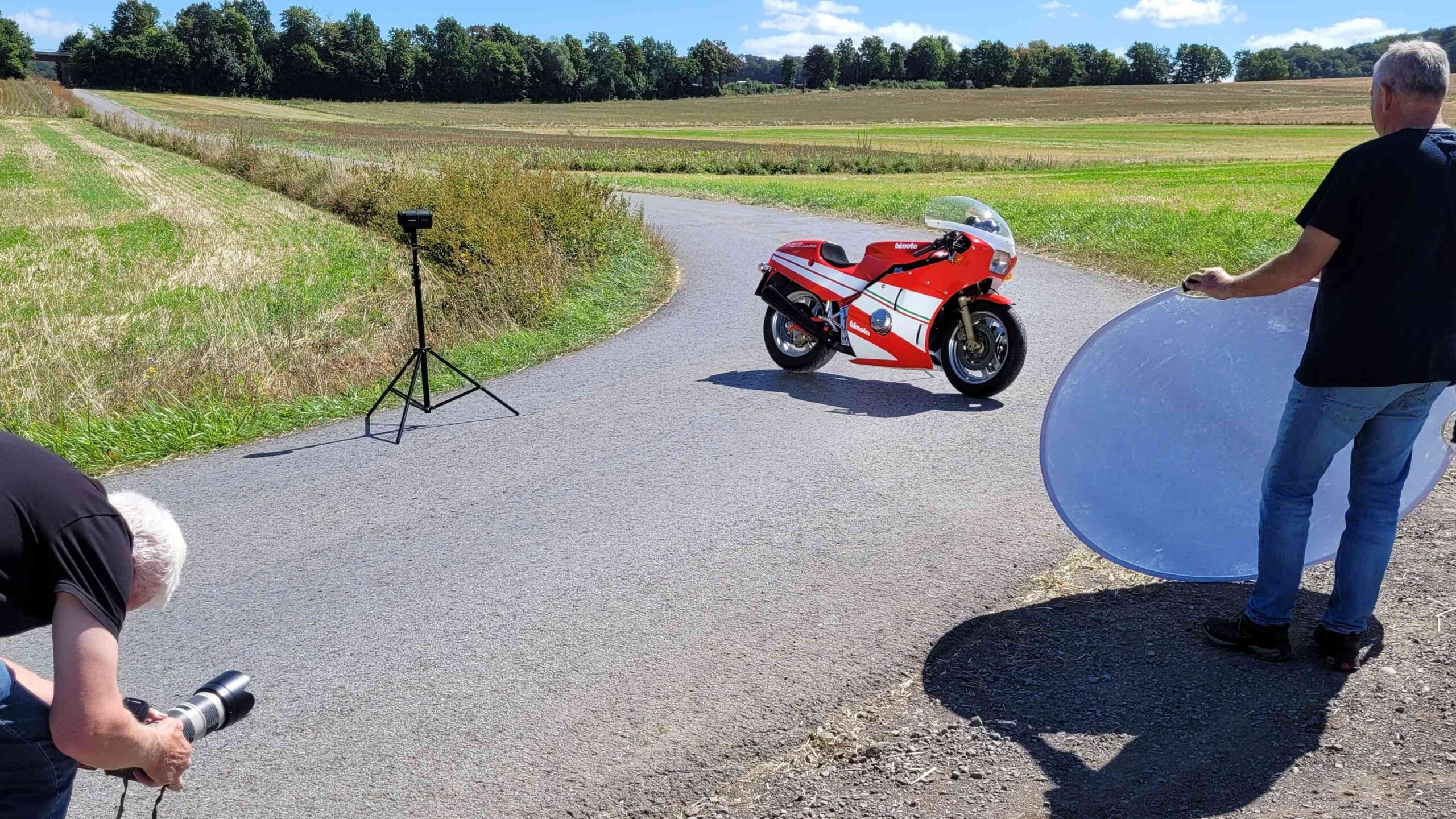
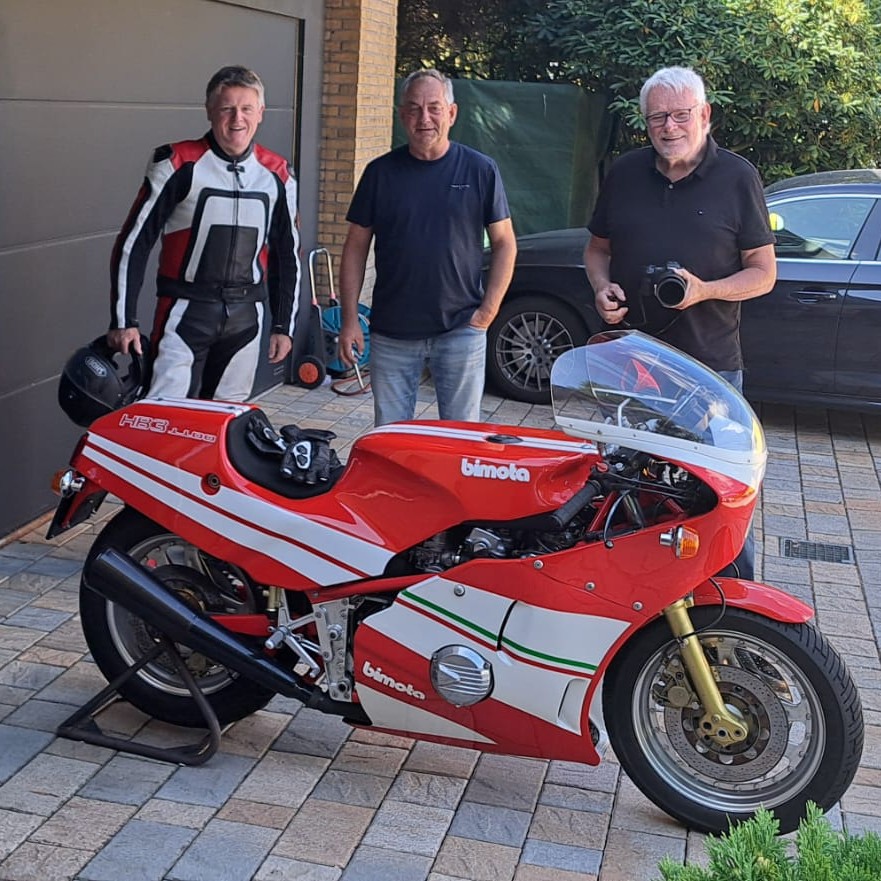
But an article about a motorcycle like this requires one thing above all: great photographs. A week later, the editorial team sent Stephan and Michael to the big photo shoot. Stephan was responsible for taking the photographs, while Michael assisted with the lighting and drove the lead car during the riding shots.
We were out for around three and a half hours in total. We started with the riding shots. Stephan sat in the trunk of the car in front of me and photographed the HB3 from various perspectives. I followed at a short distance, positioned roughly 45 degrees behind the car. For these shots, wide-angle lenses and a very low camera position were used.
We then switched to a longer focal length. During the passing shots, so-called panning shots were created, with the camera following the motorcycle as it moved, causing the background to blur accordingly. This was followed by shots of the HB3 riding through bends. Stephan positioned himself at the side of the road and was able to photograph me and the motorcycle from different perspectives as we went through the curves.
To finish the riding shots, we set off once again with the lead car. This time, the route took us through the forest. I rode directly behind the car, so that the long focal length created a strongly blurred background and made the motorcycle stand out particularly vividly.
After the riding shots came the static photographs. The HB3 was photographed outdoors from various perspectives, again using a long focal length. Carefully positioned lighting was also used to bring out the motorcycle’s shapes, colors and details to their best advantage.
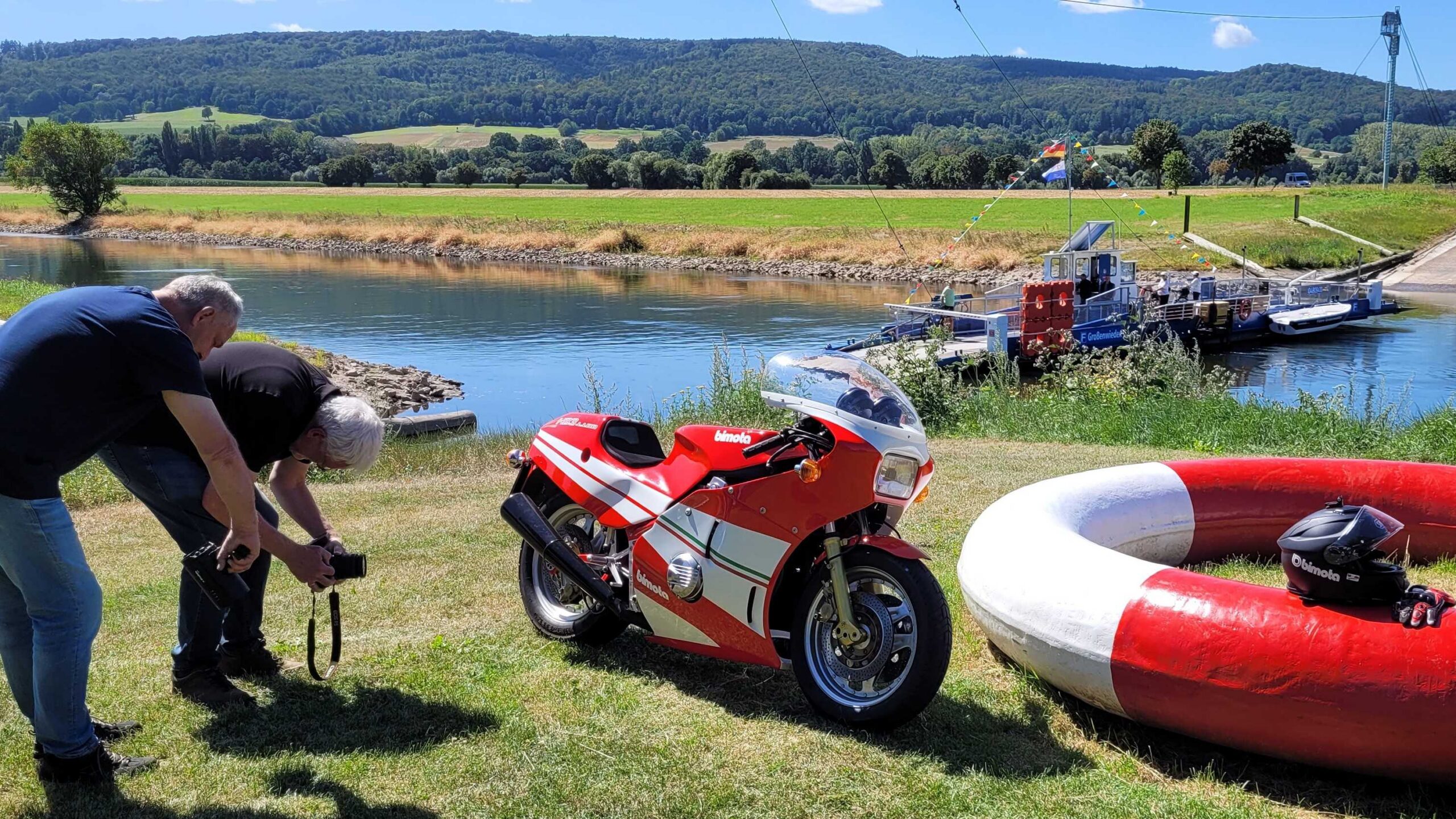
Now only the special “cover shot” was missing. For this, we drove to the Großenwieden ferry on the Weser River. This is where the photographs were taken that would later serve as the eye-catching images in the article – in this case showing the restorer together with his motorcycle against an extraordinary backdrop.
But the photo shoot was not over yet. For the final detail shots, the monocoque and fuel tank were removed. This provided a clear view of the frame and engine – precisely the kind of details that are particularly interesting on a motorcycle like the HB3 and normally remain hidden in conventional photographs.
The result of the day certainly speaks for itself: a four-digit number of photographs was taken in total. From this huge selection, Stephan will choose around 60 images for the editorial team, from which the final selection for the article will be made.
Just a few days later, the editor sent me the completed article. We discussed it together and made a few changes and additions to the text. With that, the HB3 story was essentially complete as far as the editorial team was concerned. Now it is time to wait once again – although this time with great anticipation. The article about my Bimota HB3 will appear in issue 10 of Oldtimer Praxis on September 10, 2026.
For me, this is a very special conclusion to the story of the restoration. A rare Bimota that had been in serious need of restoration has not only been brought back to life as a roadworthy motorcycle. The HB3 now also has the opportunity to tell its story to a much wider circle of classic motorcycle enthusiasts. And perhaps this article will make a small contribution towards keeping the fascinating world of classic Bimotas alive for many years to come.